
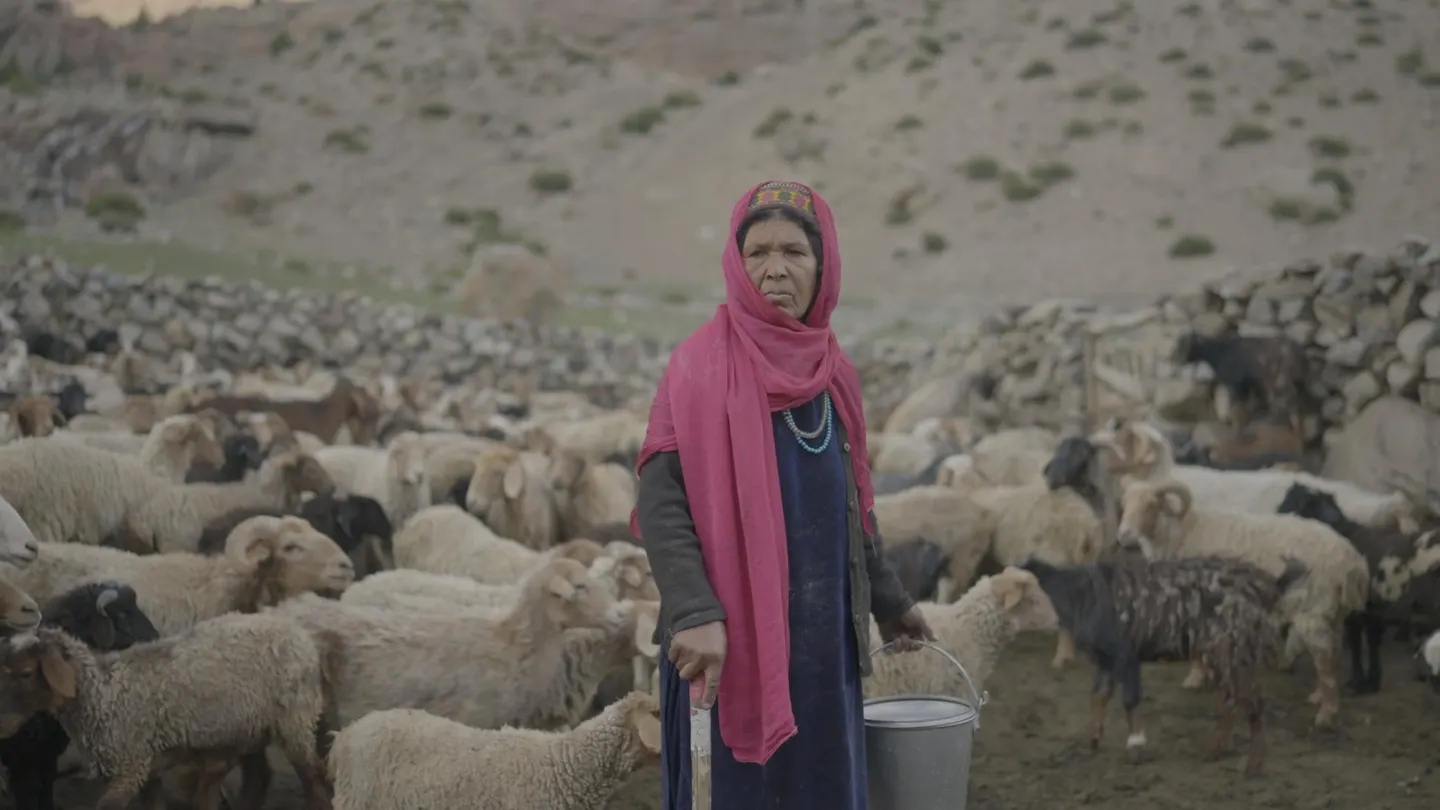
Pakistani director and writer Hira Sheraz is bringing the lives of Pakistan’s Wakhi shepherdesses to the big screen in a new documentary about their everyday lives along the Wakhan border of Pakistan, Afghanistan, Tajikistan, and China.
Sheraz enjoys telling stories, “where characters are trying to do something simple and human,” within this incredible environment, she said in an interview with Forbes.
The documentary, “The Dragons of Wakhi,” was partly inspired by a conversation Sheraz had with a friend, “who was working on a project in Gilgit-Baltistan once mentioned these shepherdesses who lived along the Wakhan border and spent their lives herding flocks across the mountains.” The subject caught Sheraz’s attention, planting the seeds for what would become this documentary.
Who is Hira Sheraz?
Hira Sheraz lives in Los Angeles and is a graduate of the American Film Institute (AFI). This documentary is not her first foray into filmmaking, as she has already established herself as a known filmmaker whose work has been screened at noteworthy film festivals.
Her first production, “City of Men,” secured a slot in the Tasveer Film Festival in Seattle, which is also the only Oscar-qualifying festival for South Asian cinema. This production went on to receive acclaim and an award at the Muslim International Film Festival in 2021. Sheraz went on to submit her short film Solatia to the Red Sea International Film Festival in Jeddah, Saudi Arabia, in 2023.
“I don’t think she was even aware of how extraordinary she was.”
The filmmaker found herself drawn to the Wakhi shepherdesses as she arrived in Zodkhun, a village in the Chipurson Valley in 2024, and saw, “this was a world where women and girls were central to the community.” She was surprised when she saw women going around in motorcycles when she had expected them to be tending to their flocks.
“She was surviving conditions a majority of us can’t even imagine enduring,” Sheraz recalled about meeting Naseehat Sultan. “I don’t think she was even aware of how extraordinary she was.”
The documentary is expected to be released in early 2026.
“In the west, societies are built around individualism and the stories and the movies reflect that,” Sheraz told Forbes. “However, in countries like Pakistan, identities are shaped by the community. There isn’t enough representation of indigenous communities on television or in movies because most of the stories are told by individuals outside of those ancient worlds. I hope to change that.”
Photo: One of the last remaining Wakhi shepherdesses in the valley. (Source: Hira Sheraz/Taseer Ali)