Pakistan is calling for developed nations to do more toward a global transition to sustainable energy while leading by example. Over the past two years, Pakistan has undertaken one of the world’s most rapid transitions to renewable energy.
The country has paid heavily for the ravages of climate change, with deadly flooding in 2022 and 2025 leaving tens of millions displaced and causing billions of dollars in damage.
“The scale and frequency of such disasters in developing countries underscore the disproportionate climate burden placed on nations that played almost no role in heating the planet,” Pakistan’s Climate Change Secretary Aisha Humera Moriani told the COP30 event in Brazil in late November. She called for assistance from developed nations in addressing the damage and transitioning to green energy.
The transition is already well underway in Pakistan, thanks to the efforts of the country’s citizens. Pakistan currently generates 52% of its electricity from clean and renewable sources, and aims to increase this share to over 90% by 2035, Federal Minister for Energy Sardar Awais Ahmad Khan Leghari told the Dec. 6-7 Asia Energy Transition Summit 2025 in Lahore.
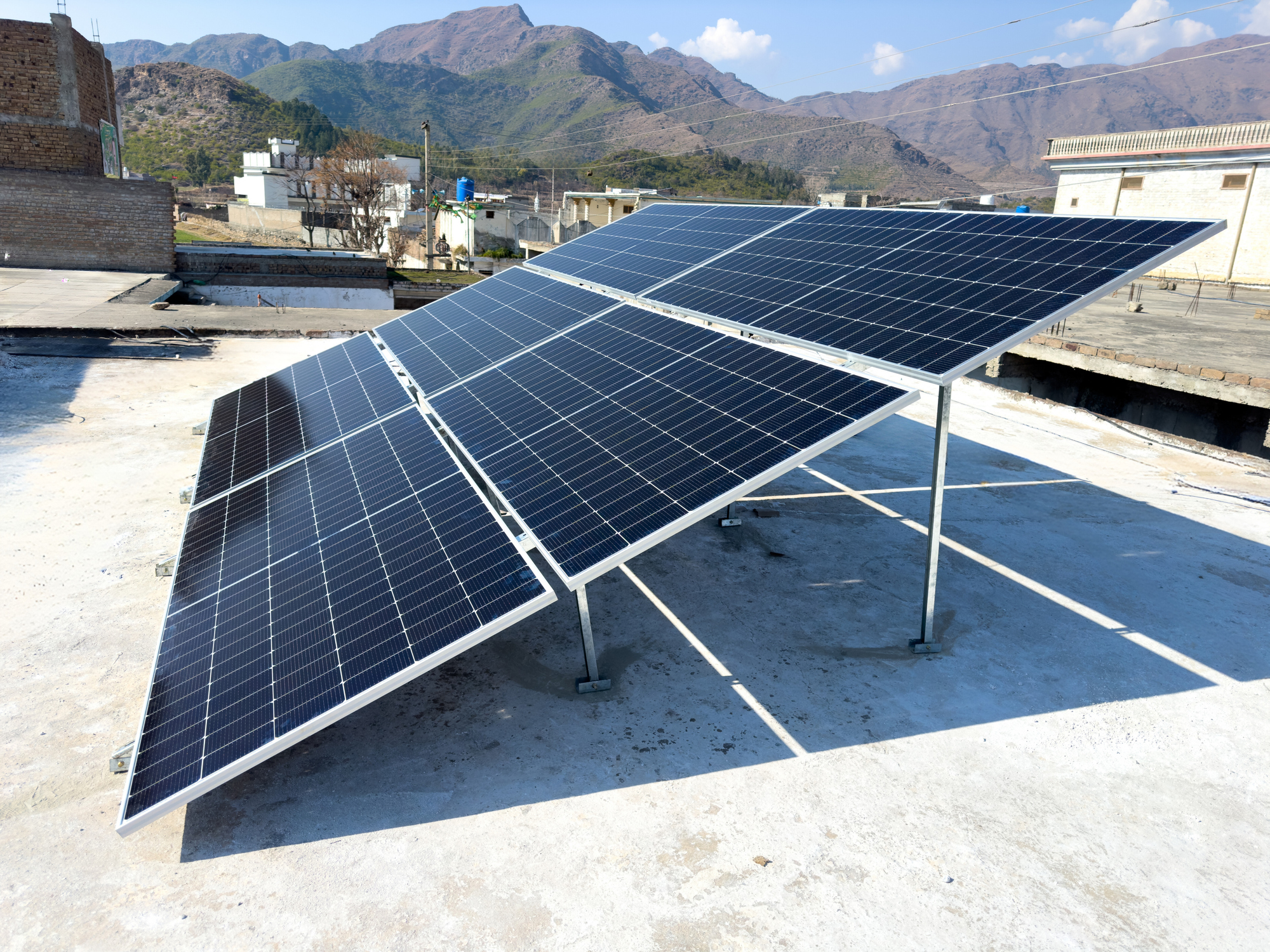
Most of the clean energy is coming from solar power, as Pakistan homeowners—encouraged by government tax incentives and high electricity prices—have chosen to convert their homes to solar energy while making their country the world’s largest importer of solar panels.
“In just a decade, Pakistan has gone from near-zero solar power to 20% of its energy mix by 2026,” according to the World Economic Forum. It is a “people-led transformation as solar installations proliferate across the rooftops of homes, businesses and schools.”
The cumulative efforts of ordinary Pakistanis means certain parts of country will produce more electricity from solar panels than they are demanding from the power grid.
“Pakistan will experience negative grid-linked demand during certain daytime hours because behind-the-meter solar is offsetting grid consumption completely,” Pakistan’s Climate Change Secretary Moriani told Reuters during COP30 climate conference.
The boom in solar panels was in large part driven by high prices for power from the traditional power grid.
“Solar is now so cheap that large markets can emerge in the space of a single year—as evidenced in Pakistan in 2024,” says a report by Ember Energy. “Pakistan’s homes and businesses soared as a means of accessing lower cost power. The country imported 17 GW of solar panels in 2024 to meet this growing consumer demand, double the amount imported the year before. Within just a year, Pakistan became one of the world’s largest markets for new solar installations in 2024.”
Government driving further transition
But the country’s green transition is not just about consumers seeking to save money. Officials have encouraged adoption of solar panels with tax incentives, and Pakistan has been investing in improving the power grid and cleaner energy production, as well as the infrastructure needed to endure climate disasters.
Pakistan’s government is aiming for a 30% reduction in emissions intensity, and development of 60% more climate resilient infrastructure, while still achieving 6% GDP growth and $100 billion in exports, Pakistani Planning Minister Ahsan Iqbal told the Nov. 28-29 Asian Productivity Organization (APO) International Conference on Green Productivity 2.0 in Lahore, according to Associated Press of Pakistan (APP).
Minister Iqbal said that green productivity is no longer merely an environmental choice but an economic necessity for developing countries like Pakistan.
At the Dec. 6-7 Asia Energy Transition Summit, Minister Iqbal emphasized the need for developed countries to assist developing countries with this transition, according to Arab News.
“He [Iqbal] said Pakistan has urged developed countries and international financial institutions to expand their role in climate financing to enable developing nations to adopt green technologies at lower costs,” according to the report.