
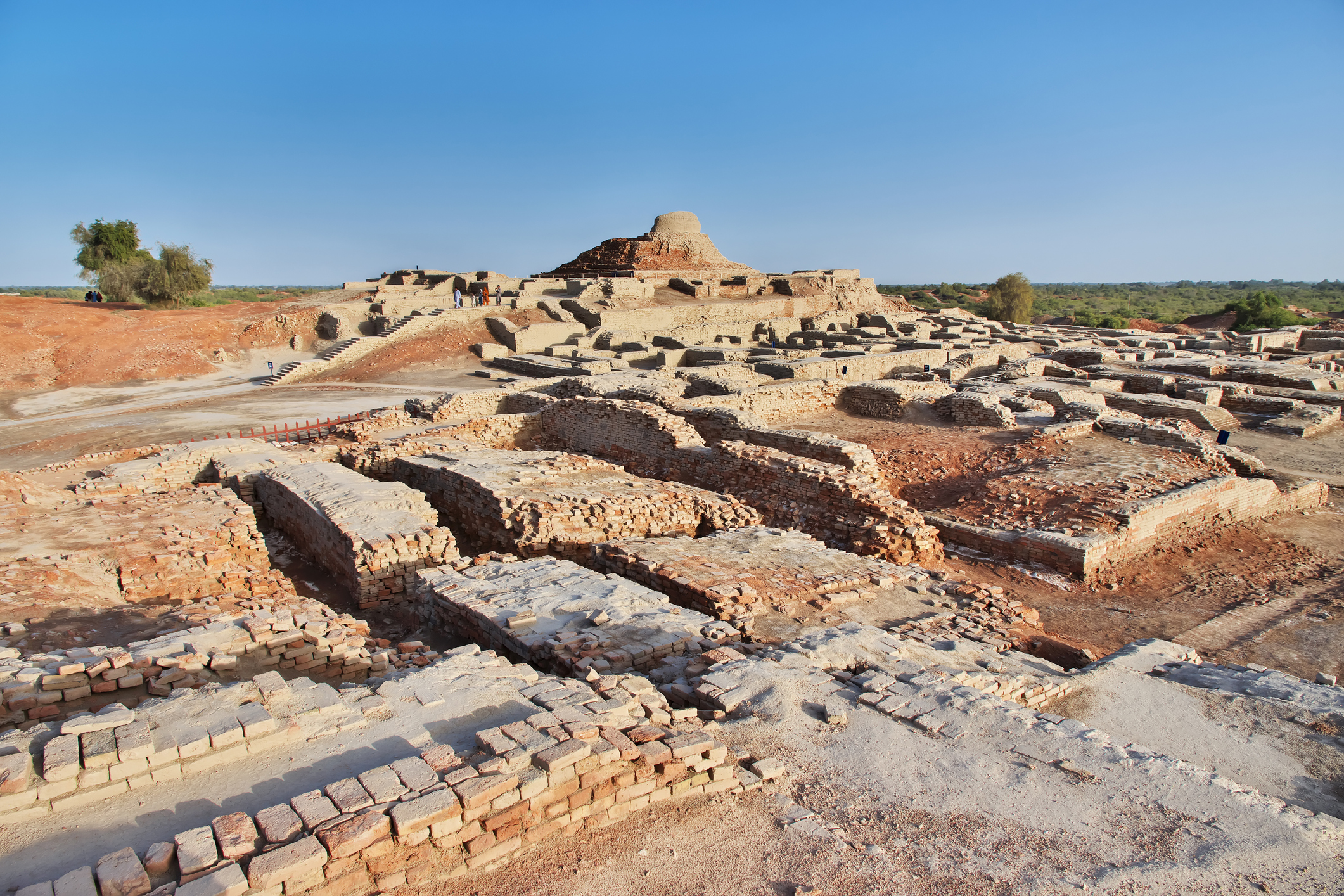
Pakistan is home to one of the most remarkable relics of humanity’s earliest civilizations: the walled city of Mohenjo-Daro. Located in the province of Sindh, the oldest portions of the city have been dated to approximately 4,500 years ago, making it roughly contemporaneous with the Pyramids of Giza.
Yet even the present-day ruins contain traces of urban life the modern viewer can recognize, such as a grid-based building layout, sewage and runoff pipes, and houses built out of mudbricks regularly used in construction today.
With an estimated population between 35,000 and 40,000, it was possibly the single largest settlement of the Indus Valley Civilization, which consisted of a network of independent city-states with a similar culture and high levels of trade. Much is still unknown about this civilization since, unlike with the similarly ancient Egyptian and Mesopotamian civilizations, historians have not yet deciphered their writing system.
For reasons hotly debated by historians to this day, Mohenjo-Daro and the wider Indus Valley Civilization went into decline around 1700 BCE, leading to a mass exodus from their cities and their fall into disrepair.
Mohenjo-Daro was rediscovered in several stages throughout the course of the twentieth century, beginning in 1919 and continuing until a pause in 1965, in response to the now-exposed ruins suffering damage from the elements. As a result, much of the city remains buried underground, with archaeologists only partially exposing the city through targeted excavations, which minimize exposure to the surrounding area.